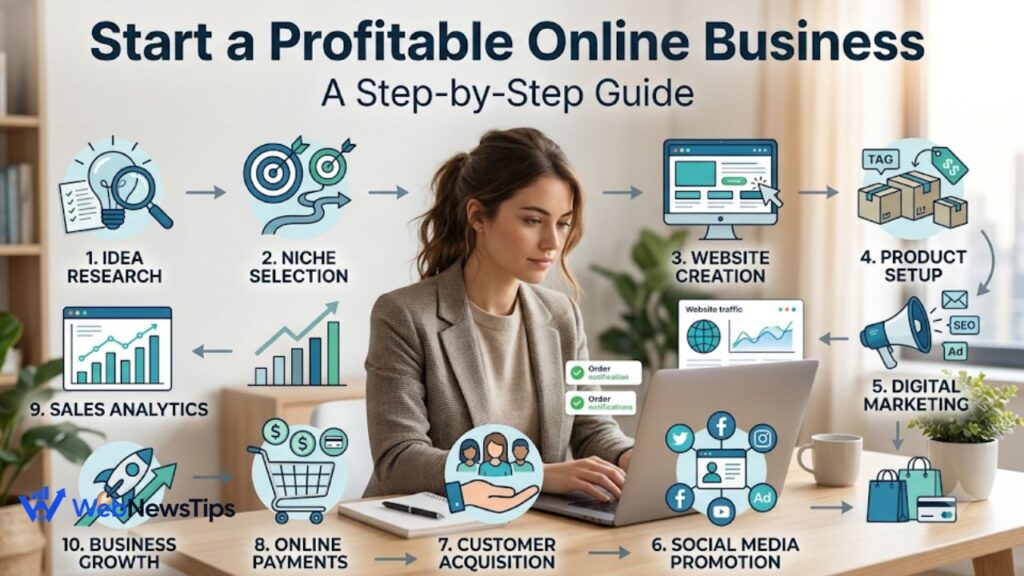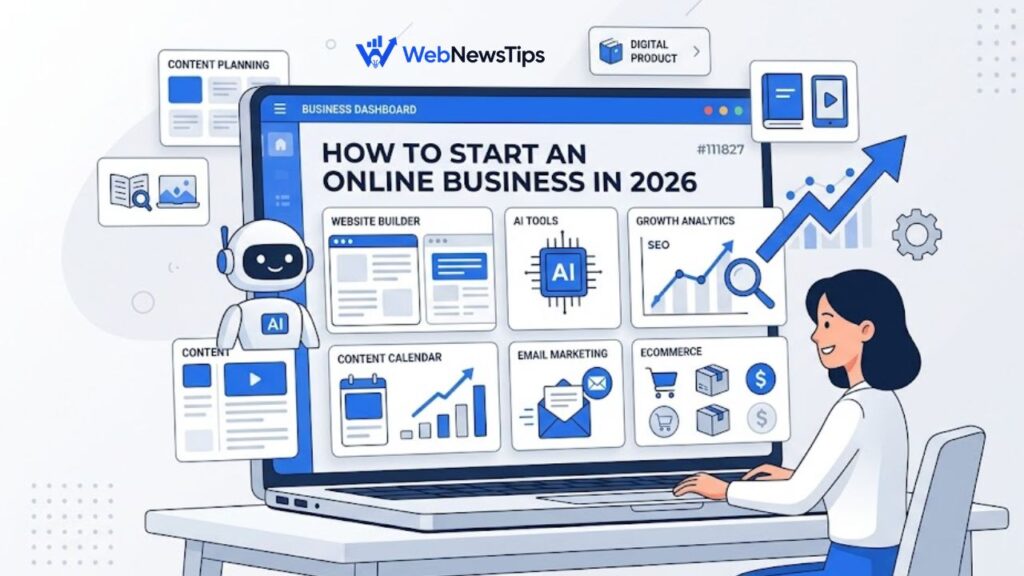
Starting an online business in 2026 does not mean you need a big team, expensive office, or complicated setup. Many successful online businesses begin with one clear idea, one helpful website, one useful offer, and consistent content that reaches the right audience.
The best part is that beginners now have more tools than ever. You can use AI tools for research and drafts, free web tools for content planning, SEO tools for page optimization, and WordPress to build a professional website. The challenge is not finding tools. The challenge is choosing the right direction and staying consistent.
This guide explains how to start an online business step by step, especially if you are a blogger, freelancer, creator, small business owner, or beginner website owner.
What Is an Online Business?
An online business is any business that uses the internet to reach customers, deliver value, sell products, offer services, build an audience, or generate revenue. It can be fully online or connected to an offline business.
Common online business models include blogging, affiliate marketing, freelancing, digital products, online courses, newsletters, ecommerce, consulting, SaaS tools, website services, and content-based niche websites.
For beginners, the easiest path is usually not to chase every business model at once. Start with one audience, one problem, one website, and one clear way to help people.
Step 1: Choose a Clear Niche
A niche is the main topic or market your online business will focus on. A clear niche makes content planning, SEO, offers, branding, and audience building much easier.
• Website and WordPress help for beginners
• AI tools for small businesses
• SEO guides for bloggers
• Digital marketing tips for freelancers
• Productivity tools for remote workers
• Templates, checklists, or digital resources for a specific audience
A good niche should be specific enough to attract the right visitors but broad enough to create many useful pages and articles over time.
Step 2: Understand Your Audience
Before you build pages or write posts, think about the people you want to help. Your audience controls your content topics, tools, products, services, and marketing strategy.
Ask simple questions like:
• Who is this business helping?
• What problem do they want solved?
• What are they searching for on Google?
• What tools or guides would make their work easier?
• What would they pay for later?
For example, WebNewsTips is focused on bloggers, freelancers, small businesses, and website owners who need AI tools, free web tools, SEO tips, WordPress help, and online growth guidance.
Step 3: Pick an Online Business Model
Your business model explains how the website may make money. You do not need to monetize on day one, but you should know the direction you are building toward.
• Blogging and display ads: Best for content websites that publish helpful guides and get search traffic.
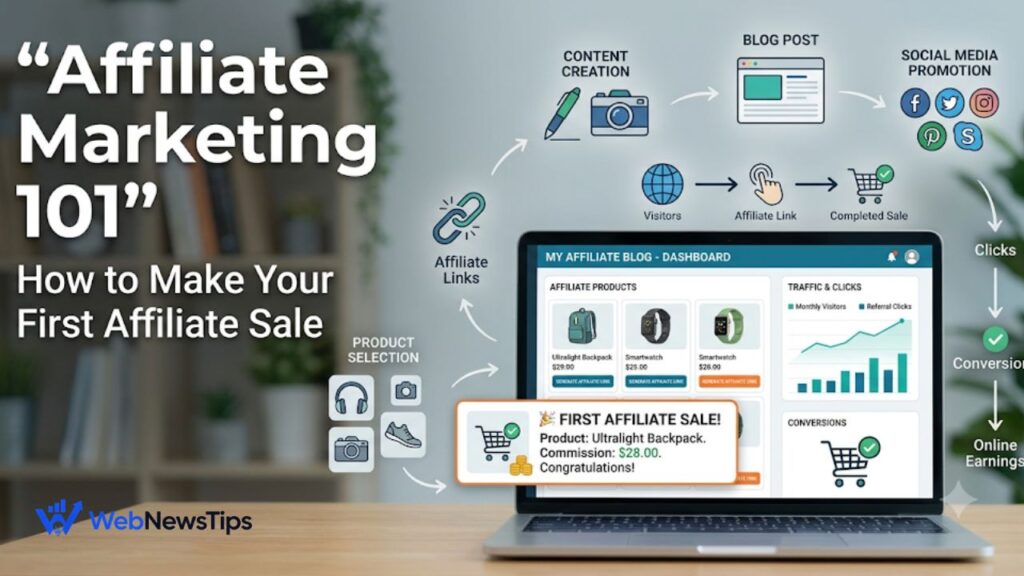
• Affiliate marketing: Best for tool reviews, software comparisons, hosting, plugins, and product recommendations.
• Freelancing or services: Best for writers, designers, SEO specialists, marketers, and WordPress experts.
• Digital products: Best for templates, checklists, ebooks, prompts, spreadsheets, and downloadable resources.
• Online courses or coaching: Best for experts who can teach a skill or process.
A beginner-friendly strategy is to start with helpful content and free tools, then add affiliate links, service pages, digital products, or email marketing after the website has useful traffic.
Step 4: Build a Simple Website
Your website is the home of your online business. Social media platforms can help, but your website gives you more control over content, search traffic, internal links, email collection, and long-term brand value.
If you use WordPress, start with your important pages, simple navigation, useful categories, and clear internal linking. You can explore the WordPress guides on WebNewsTips for beginner-friendly website setup and improvement ideas.
You should also create a strong resource hub like Free Tools, because useful tools can attract visitors, build trust, and support your main content.
Step 5: Create Helpful Content
Content is one of the most important parts of an online business. Helpful content brings visitors from search engines, answers questions, introduces your brand, and builds trust before someone buys or contacts you.
Start with content that solves beginner problems. For example:
• How to choose the best AI tool for writing
• How to improve a WordPress website speed
• How to create SEO titles for blog posts
• How to start a small business website
• Best free tools for content creators
For faster planning, use the Blog Idea Generator to create topic ideas. Then use the Blog Outline Generator to organize headings before writing.
Open the Blog Outline Generator when you want to turn a topic into a structured article plan.
Step 6: Use SEO From the Beginning
SEO helps your online business get found through search engines. You do not need advanced SEO at the beginning, but you should use the basics on every important page and article.
• Use one clear focus keyword for each article.
• Write a helpful title that matches search intent.
• Use H2 and H3 headings to organize the page.
• Create clean URL slugs.
• Add internal links to related tools, guides, and categories.
• Write a useful meta description for each page.
Use the SEO guides and tools like the SEO Title Checker, Meta Description Generator, and Slug Generator to improve pages before publishing.
Use the AI Title Generator for title ideas and the Meta Description Generator for SEO snippets.
Open the Meta Description Generator when you need a quick SEO-friendly description for a new article or page.
Step 7: Use AI Tools Carefully
AI tools can save time when you are brainstorming, outlining, writing drafts, summarizing research, creating social captions, and improving content. But AI should support your work, not replace your judgment.
Use AI tools for first drafts and ideas, then edit the content manually so it sounds useful, accurate, and trustworthy. You can browse the AI Tools section to connect AI workflows with your website and content tasks.
Before publishing AI-assisted content, check facts, add examples, improve readability, and make sure the content actually helps the reader.
Step 8: Plan Trust and Legal Basics
A serious online business should look trustworthy. Add important pages like About, Contact, Privacy Policy, Terms and Conditions, Disclaimer, and Affiliate Disclosure. These pages help visitors understand who you are, how the website works, and how to contact you.
The U.S. Small Business Administration explains that starting a business involves planning, key financial decisions, and legal activities. You can review their official 10 Steps to Start Your Business guide for general business planning information.
Step 9: Build a Simple Growth System
An online business grows when you repeat useful actions consistently. Do not depend on one viral post or one tool. Create a simple weekly system.
• Publish one helpful article or update an old article.
• Improve one tool page or landing page.
• Add internal links between related pages.
• Share one useful post on social media or email.
• Review analytics and find what visitors are using.
Use the Word Counter to check article length and improve content before publishing.
Common Mistakes Beginners Should Avoid
• Starting too many business ideas at once.
• Choosing a niche only because it looks profitable, not because users need help.
• Building a website with no clear content plan.
• Copying competitors instead of creating useful original content.
• Ignoring SEO basics such as titles, descriptions, headings, and internal links.
• Expecting instant income without consistent publishing and improvement.
Final Thoughts
Starting an online business in 2026 is easier than before, but it still requires focus. Choose a clear niche, understand your audience, build a helpful website, publish useful content, use SEO from the beginning, and support your workflow with AI tools and free web tools.
Your first goal should not be perfection. Your first goal should be building a simple online business foundation that can grow over time.Start by exploring the Free Tools, then connect your articles with related SEO, WordPress, AI Tools, and Blogging sections on WebNewsTips.