Starting an online business from home sounds simple until the decisions pile up: what to sell, how to set it up legally, where to sell, and how to find customers. If you want to learn how to start online business from home, use a order: choose a problem worth solving, create a simple offer, handle the basic legal and financial setup, build a place to sell, and market consistently. This guide walks through that process without turning it into a complicated startup project.
1. Start With a Problem, Not a Logo
A profitable online business usually begins with a useful problem. Beginners often spend too much time on logos and domains before they know what customers will pay for. Reverse that order. Choose a group you understand and a problem they already spend time or money trying to solve. Your model can be services, digital products, physical products, content, subscriptions, or a mix.
A bookkeeper might sell monthly bookkeeping, while a fitness coach could combine coaching with a downloadable planner. Clarity matters more than the model. Test this sentence: “I help [specific customer] get [specific result] without [major frustration].” If it sounds vague, narrow the offer.
2. Validate Demand Before You Spend Much Money
Validation means looking for evidence that real people want the result you plan to sell. You do not need a huge research budget. Start with search results, marketplace listings, customer reviews, relevant forums, social media comments, and conversations with people in your target group. Pay attention to repeated questions, complaints, desired outcomes, and the language customers use. Competitors are not automatically bad news. In many cases, active competitors prove that customers already pay for the solution.
Try to get a small commitment before building a large inventory or a complex website. A service business can offer a paid pilot to three clients. A digital product creator can pre-sell a small workshop. An ecommerce seller can test a limited batch instead of ordering hundreds of units. Your goal is not perfect certainty. It is reducing the chance that you spend months building something people do not care enough to buy.
3. Define Exactly What You Will Sell
Once demand looks promising, turn the idea into a clear offer. Define the product or service, who it is for, what is included, the result it helps produce, how it will be delivered, and what it costs. Avoid making the first offer too large. A narrow offer is easier to explain, price, deliver, and improve.
- Service example: a fixed-price website audit for local businesses, delivered in five working days.
- Digital product example: a beginner budgeting spreadsheet with setup instructions and video walkthroughs.
- Physical product example: a small collection of desk organization products for remote workers.
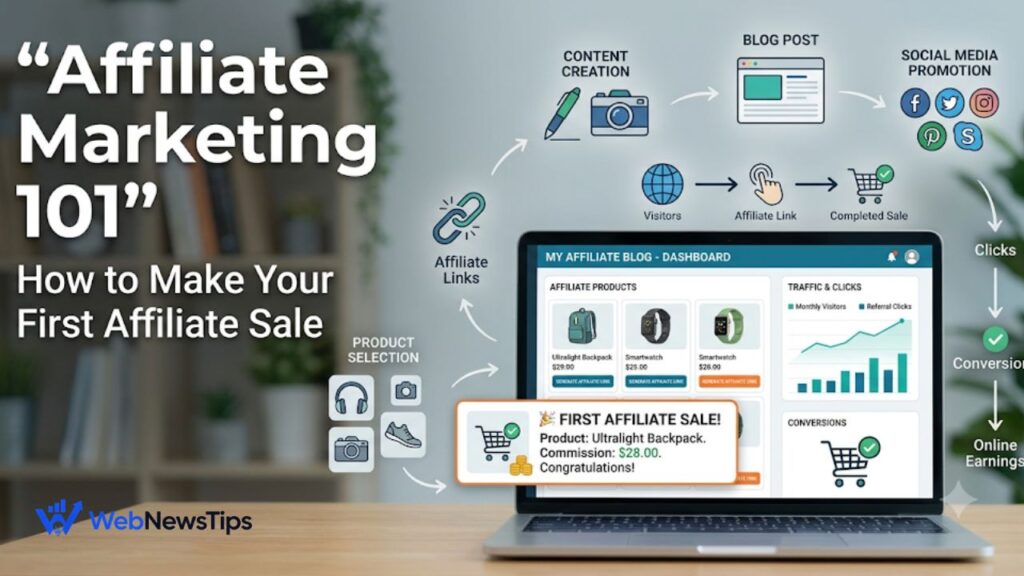
- Content business example: a niche blog that earns through affiliate recommendations, display advertising, sponsorships, or its own products.
Set a starting price based on costs, customer value, competitor ranges, and the time required to deliver. Do not assume that being the cheapest is the safest strategy. Very low prices can leave no room for marketing, refunds, software fees, taxes, or customer support. Profit comes from the difference between what the customer pays and the full cost of acquiring and serving that customer.
4. Choose a Business Name and Basic Brand
Choose a name that is easy to remember, spell, and search. Check the domain, social usernames, and possible trademark conflicts before committing. At the beginning, a simple logo, consistent colors, and a clear message are enough.
Your real brand is the customer experience. Clear pages, helpful replies, accurate delivery promises, and reliable service matter more than expensive design.
5. Handle the Legal and Financial Basics
Legal requirements depend on your country, state, province, city, business activity, and whether you work from home. Before you start taking payments, check the rules that apply where you live. Depending on your location and model, you may need to register a business name or entity, obtain tax identification, collect sales taxes or VAT, secure local licenses or permits, follow home-occupation rules, or meet industry-specific requirements.
Business structure also matters. A sole proprietorship can be simple to start in many places, while a limited liability company or similar structure may offer different liability, tax, or administrative features. There is no single best structure for every beginner. If the legal or tax consequences are meaningful, speak with a qualified local accountant, attorney, or business adviser rather than copying a setup from someone in another country.
Keep business money separate early. Use a dedicated account where available, record sales and expenses, save receipts, and set aside money for taxes. Even a basic spreadsheet is better than rebuilding months of transactions from memory.
6. Build a Simple Place Where Customers Can Buy
You do not need a complicated website on day one, but customers need a clear path from interest to purchase. Depending on your business, that could be a WordPress site, Shopify store, Etsy shop, marketplace listing, booking page, or simple service website. Your core pages should explain what you sell, who it is for, why someone should trust you, the price or next step, frequently asked questions, contact details, and your key policies.
If your plan includes education or search traffic, publishing useful content can become an important long-term asset. The WebNewsTips guide on starting a blog explains the basic setup for beginners and can help you build a content channel alongside your main offer.
7. Create a Small but Trustworthy Online Presence
Trust matters because customers cannot walk into your home office. Use accurate photos or mockups, clear descriptions, transparent pricing, realistic delivery times, contact details, and straightforward return or refund information. Service businesses should show relevant work samples, while genuine customer feedback can be displayed with permission.
Avoid fake reviews, false urgency, and exaggerated claims. Clear expectations build more durable trust than hype.
8. Build Your First Marketing Blueprint
A beginner marketing plan does not need ten channels. Pick one channel for people already searching for a solution and one channel for building awareness. For example, a local service might combine Google search visibility with Facebook or Instagram. An ecommerce brand might combine marketplace search with short-form video. A consultant might combine SEO articles with LinkedIn outreach.
A useful first-month blueprint looks like this:
- Week 1: publish the core website or sales page and make sure the offer, pricing, contact method, and checkout work properly.
- Week 2: create three to five helpful pieces of content based on questions potential customers already ask.
- Week 3: begin direct outreach, community participation, partnerships, or short-form social content instead of waiting for traffic to appear by itself.
- Week 4: review traffic, inquiries, conversion points, and customer questions; then improve the page or offer using what you learned.
Content marketing works best when it answers real questions and naturally leads readers toward the next step. If you are new to that approach, the WebNewsTips content marketing guide explains how useful content can attract, educate, and convert an audience over time.
9. Make SEO Part of the Foundation
SEO is slower than outreach or paid ads, but it can create steady traffic over time. Build pages around real customer searches, use clear titles and headings, add natural internal links, describe offers plainly, improve mobile usability, and keep the site fast. Local businesses should also pay attention to location pages and their Google Business Profile.
A smaller library of useful pages is better than dozens of thin keyword articles. Write for a specific customer and answer the question properly instead of repeating the same phrase.
For more channel ideas, browse the WebNewsTips Digital Marketing guides for practical beginner-friendly strategies.
10. Track What People Actually Do
Once visitors arrive, basic analytics help you understand whether marketing is working. Track where visitors come from, which pages they visit, what actions they take, and which channels produce inquiries or sales. Google Analytics 4 can help you monitor events, sessions, traffic sources, and acquisition performance. The WebNewsTips GA4 guide provides a beginner-friendly walkthrough if the reporting screens feel overwhelming.
Choose a few business numbers instead of watching every metric. Useful starting measures include website visitors, email sign-ups, inquiries, conversion rate, average order value, cost to acquire a customer, repeat purchases, and gross profit. A thousand visitors with no sales are less valuable than one hundred targeted visitors who generate five customers.
11. Get the First Customers Manually
Many first sales come from activities that do not feel passive at all. Tell relevant people what you have launched, contact potential clients personally, ask for introductions, answer questions in communities, offer a useful demonstration, or partner with a complementary business. Early conversations are valuable because they reveal objections and language you can later use on your website.
If you sell a service, focus on a small number of ideal prospects and personalize the outreach. If you sell products, encourage a first group of buyers to share honest feedback. If you run a content business, promote each useful article rather than assuming search engines will discover and rank it immediately. The early stage is about learning what makes a real person say yes.
12. Improve the Business Before You Try to Scale
Before increasing ad spend or adding products, make sure the offer is profitable, fulfillment is reliable, customers understand what they are buying, and support is manageable. Document repeatable tasks such as onboarding, order handling, refunds, publishing, and bookkeeping.
Improve one bottleneck at a time: traffic, conversion, fulfillment, or profit. That keeps growth focused and prevents small problems from becoming expensive.
Common Mistakes to Avoid
- Trying to serve everyone. A specific customer and problem make marketing much easier.
- Buying too much inventory before testing demand.
- Ignoring taxes, permits, privacy requirements, or platform rules until a problem appears.
- Spending heavily on branding before proving the offer.
- Depending on one marketplace or social platform without building an owned website or email list over time.
- Confusing revenue with profit. Sales can rise while cash disappears into ads, shipping, software, returns, and fees.
A Simple 30-Day Launch Plan
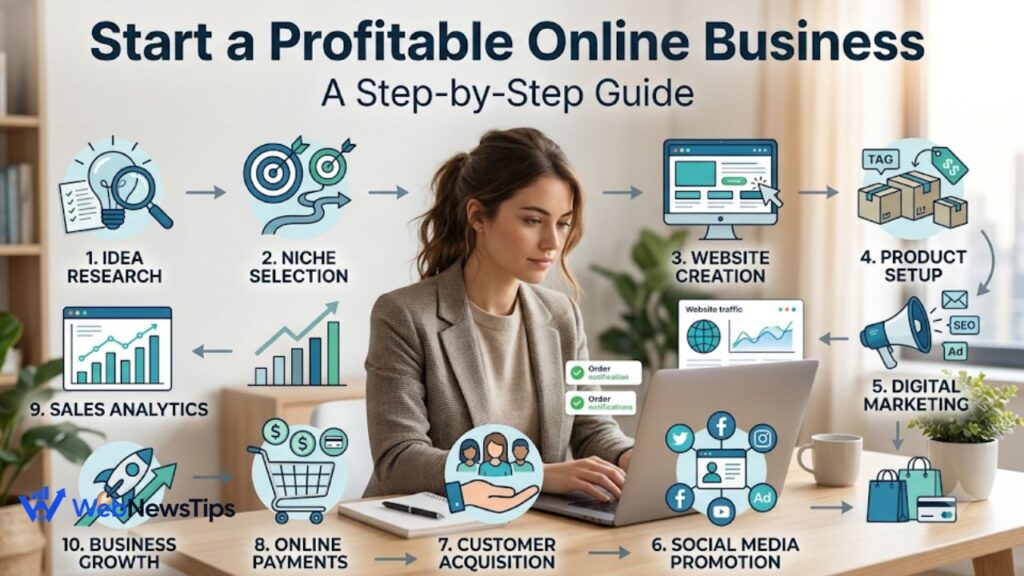
- Days 1-5: choose the customer, problem, business model, and one clear offer. Research competitors and talk to potential buyers.
- Days 6-10: choose the name, check the legal setup in your location, create basic bookkeeping, and calculate your real costs and starting price.
- Days 11-17: create the sales page, store, or service website. Add payment, contact, policies, and a clear call to action.
- Days 18-23: create useful launch content, prepare outreach messages, and set up one or two marketing channels.
- Days 24-30: actively seek the first customers, track questions and objections, review your analytics, and improve the offer based on real behavior.
Final Thoughts
Learning how to start online business from home is mostly about doing the basics in the right order. Solve a real problem, test demand, keep the first offer simple, handle the legal and money basics, create a trustworthy place to buy, and market consistently. Your first version does not need to be perfect. Build the smallest useful version, get it in front of real people, learn from their behavior, and grow from evidence rather than guesswork.
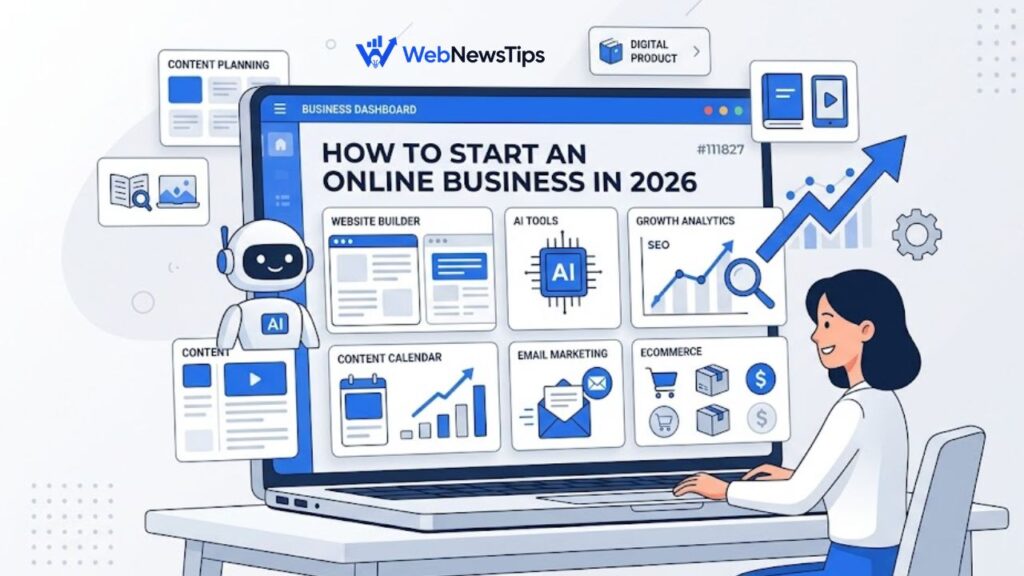
For a broader beginner overview, you can also read How to Start an Online Business in 2026 on WebNewsTips.
Frequently Asked Questions
Can I start an online business from home with little money?
Yes. Services, freelancing, content, and some digital products can start with modest costs. Physical products usually need more cash for inventory and shipping. Validate demand before spending heavily.
Do I need to register a business before I make my first sale?
It depends on your location and activity. Registration, tax accounts, permits, or licenses may be required, so check the official rules where you live before trading.
What is the easiest online business for a beginner?
A skill-based service is often simple because it needs no inventory. The best model still depends on your skills, time, budget, and a problem customers will pay to solve.
How long does it take for an online business to become profitable?
There is no fixed timeline. Services may become profitable quickly, while product and content businesses can take longer. Track costs and profit from the beginning rather than judging progress only by revenue.
Editorial Note on Legal Requirements
Business registration, taxes, licenses, permits, privacy obligations, and home-business rules vary by location and activity. Readers should confirm requirements with their local government or a qualified professional. In the United States, the Small Business Administration notes that business structure affects taxes, paperwork, fundraising, and personal liability, and that many businesses also need tax IDs and relevant licenses or permits. SBA business structure guidance