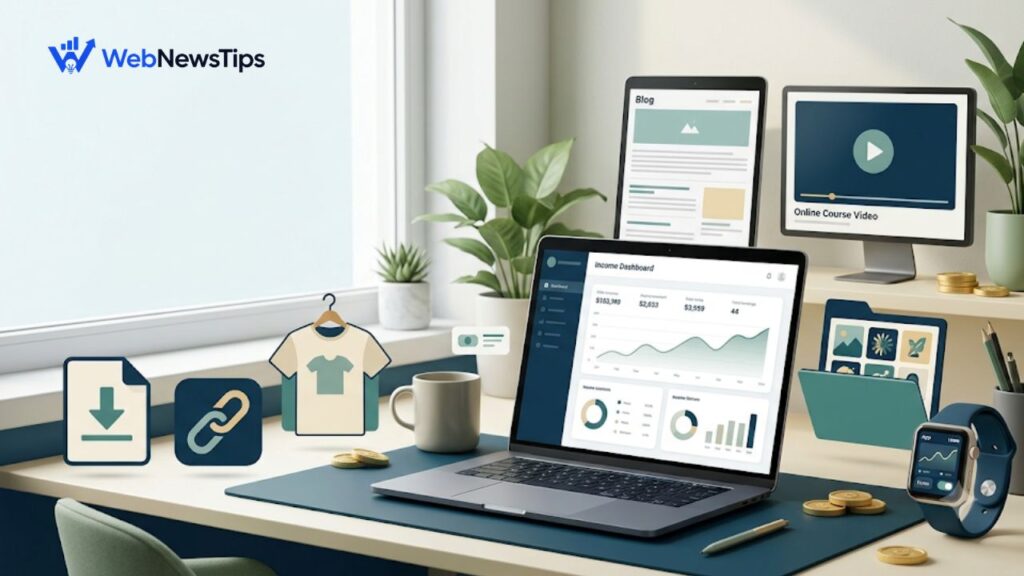
Search for passive income online and you will quickly find promises that sound too good to be true: upload one file, build one page, or click a few buttons and money supposedly arrives forever. Real life is less dramatic. Most passive income starts with active work, testing, and patience. The useful part is that some online models can keep earning after the original work is finished, so your income is not tied to every hour you personally work.
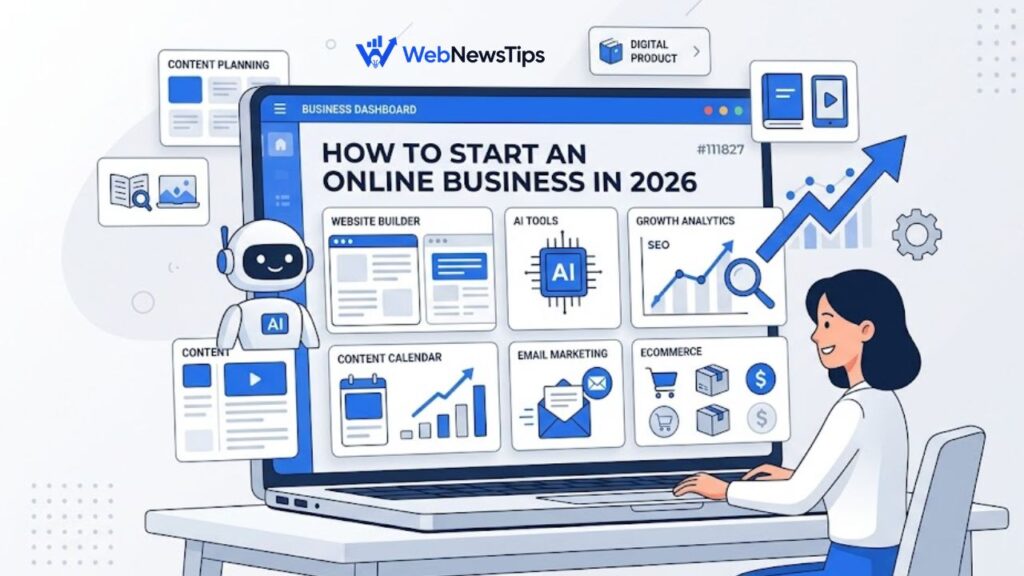
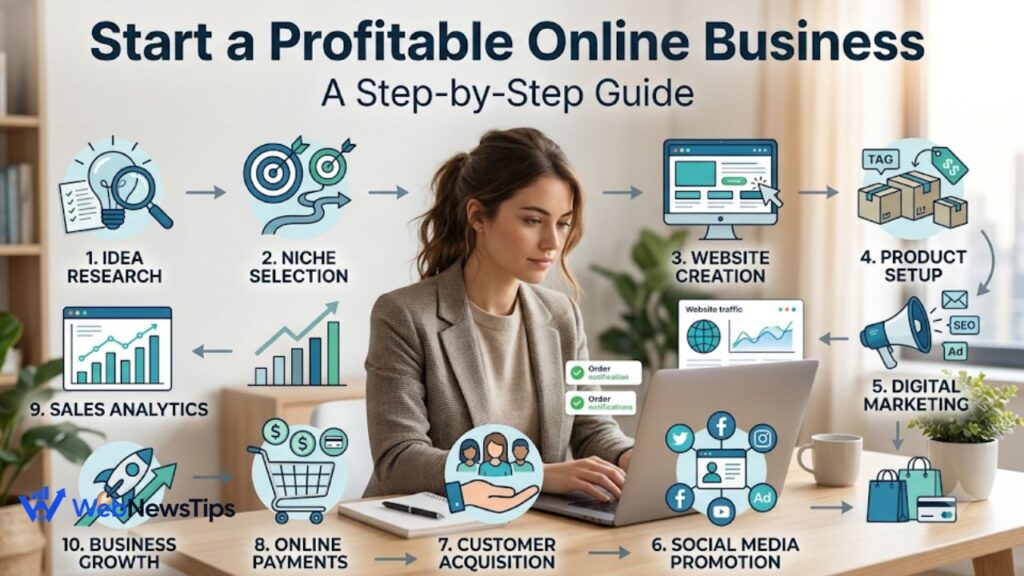
This guide looks at seven realistic passive income ideas online for beginners and small creators. None is guaranteed, and none is completely hands-off. The goal is to choose a model where one piece of work can be sold, viewed, licensed, or recommended many times. If you are still deciding what kind of online business to build, read the WebNewsTips guide on how to start an online business first, then use the ideas below to choose a practical income stream.
What Passive Income Really Means Online
Passive income does not mean zero work. A better definition is income that can continue without you completing a new task for every single payment. A template can sell while you sleep, an old article can earn an affiliate commission months later, and a print-on-demand design can be fulfilled automatically. But you still need to create the asset, attract traffic, handle updates, answer occasional customer questions, and replace ideas that stop working.
Quick Comparison of the 7 Ideas
| Idea | Startup Cost | Time to First Income | Ongoing Work |
| Digital products | Low | Days to months | Low to medium |
| Affiliate marketing | Low | Weeks to months | Medium |
| Print-on-demand | Low to medium | Days to months | Medium |
| Evergreen blog + ads | Low to medium | Months | Medium |
| Recorded mini-course | Low to medium | Weeks to months | Medium |
| Stock / licensable assets | Low | Weeks to months | Low to medium |
| Micro-SaaS / no-code tool | Medium | Weeks to months | Medium to high |
1. Sell Digital Products and Templates
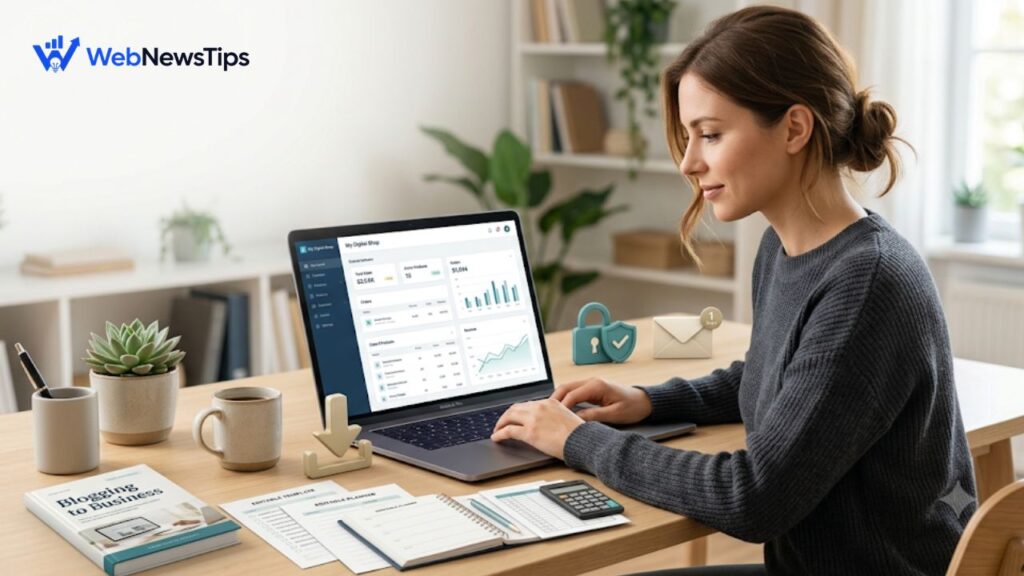
Digital products are one of the cleanest online income models because there is no physical inventory to store or ship. You create a useful file once and can sell copies repeatedly. Examples include spreadsheets, planners, checklists, Canva-style templates, ebooks, printable worksheets, Notion-style systems, prompt packs, presets, study resources, and business documents.
How to make this model more realistic
- Create the smallest useful version first and improve it from customer feedback.
- Show clear previews so buyers understand exactly what they receive.
- Build one product around a repeatable problem instead of copying a trendy bundle.
- Use blog posts, social content, or email to bring targeted traffic to the product.
If you already publish helpful content, a digital product can be a natural next step. The WebNewsTips content marketing guide can help you create useful content that attracts the same audience likely to buy your resource.
2. Build Affiliate Content Around Buying Decisions
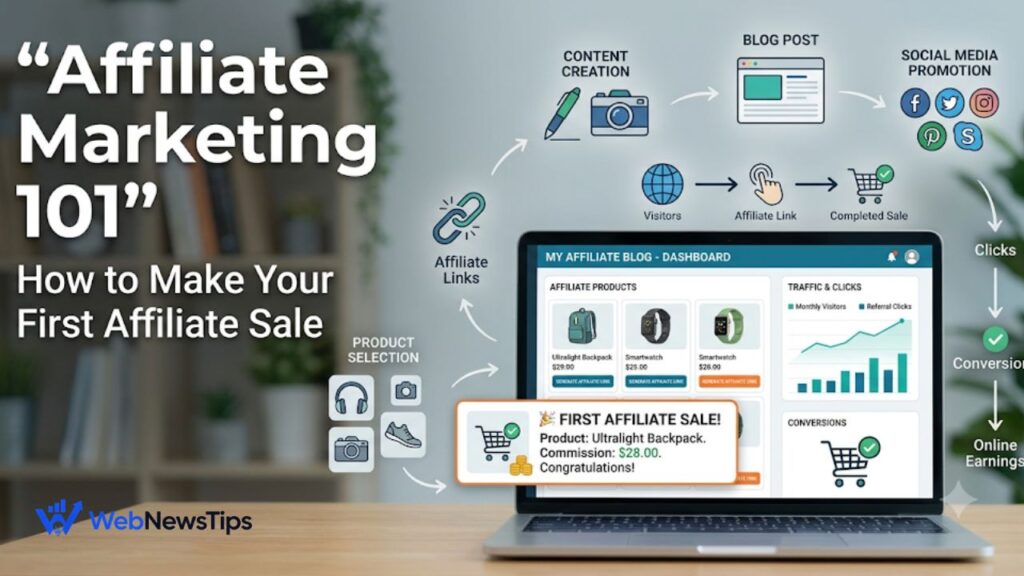
Affiliate marketing means recommending a product or service through a tracked link and earning a commission when a qualifying action happens. It can become semi-passive because an article, tutorial, comparison, or video may keep sending buyers long after publication. The model works best when your content helps someone make a decision rather than simply dropping links everywhere.
Disclose financial relationships clearly and close to the recommendation. You can also link readers to your site’s affiliate disclosure page. Clear disclosure protects trust and helps readers understand when you may earn from a purchase.
A simple beginner approach
- Pick one topic where you already understand the products or services.
- Create helpful reviews, comparisons, tutorials, and problem-solving posts.
- Place affiliate links where they naturally help the reader take the next step.
- Track which pages generate clicks and improve the content that already shows buyer intent.
3. Start a Print-on-Demand Store
Print-on-demand, or POD, lets you sell designs on products such as shirts, mugs, posters, tote bags, and phone cases without buying a large batch of inventory first. When a customer orders, a fulfillment partner prints and ships the item. That removes one of the biggest risks of traditional ecommerce: paying for stock before you know whether a design will sell.
A smart POD workflow is to test a small set of designs, study clicks and sales, then expand only the themes that receive real interest. If you want to understand how to attract buyers beyond marketplace search, the WebNewsTips digital marketing guide covers the basic channels you can use to promote an online offer.
4. Build an Evergreen Blog and Monetize the Traffic
A niche blog is slower than many social-media side hustles, but it can create durable assets. A useful article that ranks in search can bring visitors for months or years. Once traffic becomes consistent, the site can earn through display advertising, affiliate links, sponsored content, digital products, or a combination of these methods.
The key word is evergreen. News posts can spike and disappear, while guides such as how-to articles, comparisons, checklists, definitions, and problem-solving tutorials can keep answering the same search need. If blogging is new to you, start with the WebNewsTips guide on how to start a blog and focus on a topic narrow enough that readers know why they should return.
5. Create a Recorded Mini-Course
A recorded course can turn your knowledge into a product that sells repeatedly. You do not need a 40-hour academy. In fact, beginners often do better with a focused mini-course that promises one clear outcome: set up a portfolio, edit product photos, learn a spreadsheet workflow, create a basic fitness routine, or complete a specific software task.
Courses are not fully passive because lessons become outdated and students sometimes need help. However, a good course paired with an email sequence can sell repeatedly without you teaching the same lesson one-to-one. The WebNewsTips guide to email marketing for small businesses is useful if you want to build a simple follow-up sequence around a course or digital product.
6. License Stock Photos, Graphics, Video, Audio, or Other Digital Assets
Creative assets can produce long-tail income when the same file is licensed multiple times. Depending on your skills, that could mean stock photos, icons, illustrations, motion graphics, sound effects, video clips, presentation elements, website components, fonts you have the rights to sell, or other reusable digital resources.
Quality, licensing terms, originality, file organization, and accurate keywords matter. Platforms may also change commission structures or acceptance rules, so avoid building your entire income around a single marketplace. Keep your original files organized and, where practical, use more than one legitimate sales channel.
7. Build a Small Micro-SaaS or No-Code Tool
This is the most technical idea on the list, but it can also create recurring revenue. A micro-SaaS is a small software product that solves one narrow problem. It might generate reports, clean data, organize bookings, create documents, track a simple metric, or automate a repetitive task for a specific type of customer. No-code and low-code tools can reduce the amount of custom development needed for simple products.
Do not start by building a complicated app for everyone. Find one annoying job people repeat every week, create the smallest tool that removes part of that work, and charge a simple monthly or yearly fee. The advantage is recurring revenue. The downside is maintenance: bugs, customer support, hosting, payment issues, and product updates make software less passive than a PDF or template.
How to Choose the Right Passive Income Idea
Use three filters: what you can create, who you can reach, and how long you can wait for results. If you need a low-cost start and enjoy design, digital products or POD may fit. If you are comfortable writing and SEO, affiliate content or an evergreen blog may be better. If people already ask you to teach a skill, a mini-course is a natural option. If you can build software, a narrow subscription tool may have higher upside but also more responsibility.
Do not launch all seven at once. Pick one core model and one traffic channel. Give it enough time to produce real data, then decide whether to improve, change, or add another income stream. Spreading yourself across five marketplaces, three social platforms, a blog, and a course in the first month usually creates activity without progress.
Track What Is Actually Working
For website tracking, the WebNewsTips Google Analytics 4 guide for beginners explains events, sessions, and acquisition reports. Use that data to find which channels send engaged visitors and which pages deserve more internal links, stronger calls to action, or a related product.
Common Passive Income Myths to Avoid
- “It should make money immediately.” Most models need testing, traffic, trust, or a product library before income becomes consistent.
- “More products always mean more money.” Ten useful, well-positioned assets can outperform hundreds of rushed uploads.
- “Once it is online, I never touch it again.” Listings, links, pricing, content, software, and customer expectations change.
- “I need a huge audience.” A small audience with a clear problem and buying intent can be more valuable than a large random following.
- “Passive income is guaranteed.” Every model has competition and risk. Treat early work as testing, not promised future earnings.
A Simple 30-Day Starting Plan
During week one, choose one idea and define the exact person you want to help. In week two, create the smallest sellable or publishable version: one template, three POD designs, one affiliate comparison, one detailed blog post, a mini-course outline, a small asset pack, or a simple tool prototype.
In week three, publish the offer and build one traffic path around it. That could be search-focused content, a small email list, social posts, or marketplace SEO. In week four, review impressions, clicks, saves, sign-ups, and sales. Improve the offer that gets attention rather than immediately abandoning it for a new idea.
Frequently Asked Questions
What is the easiest passive income idea to start online?
For many beginners, a small digital product or affiliate content is the easiest to test because startup costs can be low. The best choice still depends on your skills and whether you already have access to an audience.
Can print-on-demand really be passive income?
It can be semi-passive because printing and shipping can be automated, but design research, listings, advertising, customer service, and account management still need attention. Think of POD as automated fulfillment, not automatic profit.
How long does online passive income take to work?
There is no fixed timeline. A digital product can make an early sale quickly, while a search-driven blog may take months to build meaningful traffic. Your niche, offer quality, competition, traffic source, price, and consistency all affect the result.
Should I start more than one income stream?
Eventually, yes, because diversification reduces dependence on one platform or offer. At the beginning, focus usually wins. Prove one model first, document the process, and add a second stream only when the first is stable enough to manage.
Final Thoughts
The most realistic passive income ideas online are not shortcuts. They are systems that let one useful asset keep creating value after the first round of work. Digital products can sell repeatedly, affiliate content can keep recommending useful tools, POD can automate fulfillment, evergreen blogs can compound traffic, courses can package knowledge, creative assets can be licensed many times, and small software tools can generate recurring subscriptions.
Start with one model that fits your skills and one audience you understand. Make something genuinely useful, publish it, measure the response, and improve it from real data. That approach may look slower than a viral “make money while you sleep” promise, but it gives you something far more valuable: an online income system built on assets, customers, and evidence rather than hype.